Ewald Demeyere

What Does Diapason Mean?

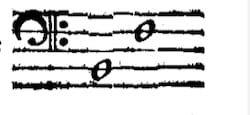
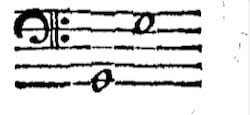
The Greek term diapason has several meanings in English. One of them is used in music as a synonym for the interval of the octave, dia meaning “over”, pason “all”. See also diatessaron, hemidiapente and diapente. (Very) Select Bibliography Baragwanath, Nicholas. Note-Naming, Galant Schemata, and the “Thread” of Vivaldi’s Concerto for Four Violins, Op. 3

What Does Diapason Mean? Read More »

What Does Diatessaron Mean?

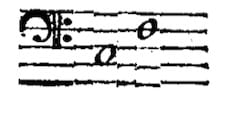
The Greek term diatessaron is used in music as a synonym for the interval of the perfect fourth, dia meaning “over”, tessaron “four”. See also hemidiapente, diapente and diapason. (Very) Select Bibliography Baragwanath, Nicholas. Note-Naming, Galant Schemata, and the “Thread” of Vivaldi’s Concerto for Four Violins, Op. 3 No. 10 (RV 580), in: Music Theory

What Does Diatessaron Mean? Read More »

What Does Diapente Mean?

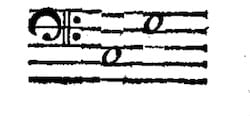
The Greek term diapente is used in music as a synonym for the interval of the perfect fifth, dia meaning “over”, pente “five”. Johann Mattheson, for instance, gives the following description: “The fifth is called diapente, i.e. “over five”, because it comprises five diatonic tones, of which the two outermost, as endpoints, are principally perceived.”

What Does Diapente Mean? Read More »

Telemann’s SSGBÜ: On Direct Fifths and Octaves

In this essay, I discuss Telemann’s views on direct fifths and octaves. Telemann takes a stricter stance on direct fifths and octaves than his 18th-century colleagues —recommending to avoid them also between the bass and an inner part— yet remains flexible, occasionally even producing outer-part progressions that are downright objectionable. The musical examples are taken

Telemann’s SSGBÜ: On Direct Fifths and Octaves Read More »

Telemann’s SSGBÜ: Chord Substitutions and Additions

Contrary to what one might expect, a thoroughbass player does not always have to respect the figurings as they are indicated. In fact, as Telemann presents in his Singe-, Spiel- und General-Bass-Übungen, alternative chords and/or settings are in certain cases not only possible but even preferable. Telemann explains how and when certain expected/figured chords can

Telemann’s SSGBÜ: Chord Substitutions and Additions Read More »

Telemann’s SSGBÜ: Chordal Rhythm in 6/8, 9/8 and 12/8

This essay is the fifth and last in a series examining Telemann’s views on chordal rhythm in a thoroughbass realization. Here, I discuss chordal rhythm in a 6/8, 9/8 and 12/8 time signature, as presented in his Singe-, Spiel- und General-Bass-Übungen, whose principles are the same. In arias in 6/8, 9/8 and 12/8, Telemann usually

Telemann’s SSGBÜ: Chordal Rhythm in 6/8, 9/8 and 12/8 Read More »