- Heinichen’s General-Bass: Triads and Number of Parts
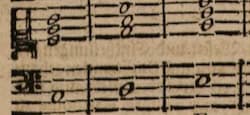 This essay is the second in a series exploring Johann David Heinichen’s General-Bass in der Composition. Heinichen takes four-part thoroughbass realization as his starting point,… Read more: Heinichen’s General-Bass: Triads and Number of Parts
- Heinichen’s General-Bass in der Composition: Context
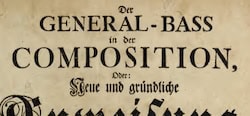 This essay is the first in a series exploring Johann David Heinichen’s General-Bass in der Composition. Heinichen’s General-Bass in der Composition (1728) is a monumental… Read more: Heinichen’s General-Bass in der Composition: Context
- Telemann’s SSGBÜ: What to Double in a Sixth Chord?
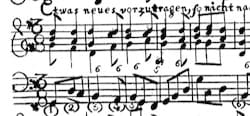 In this essay, I discuss Telemann’s views on which note can be doubled in a sixth chord. Since Telemann advocates a generally four-part realization, he… Read more: Telemann’s SSGBÜ: What to Double in a Sixth Chord?
- What Does Fauxbourdon Mean?
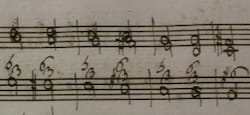 Fauxbourdon is a contrapuntal technique originating in the early Renaissance, often resulting in parallel sixths, though not exclusively so. Today this term is frequently used… Read more: What Does Fauxbourdon Mean?
- What Does Hemidiapente Mean?
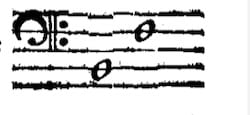 The Greek term hemidiapente is used in music as a synonym for the interval of the diminished fifth, hemi meaning “half”, dia “over”, pente “five”.… Read more: What Does Hemidiapente Mean?
- What Does Diapason Mean?
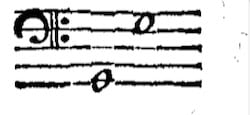 The Greek term diapason has several meanings in English. One of them is used in music as a synonym for the interval of the octave,… Read more: What Does Diapason Mean?