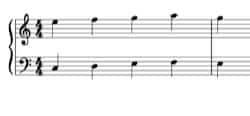
Parallel motion means that two voices move in the same direction, thereby preserving the same generic vertical interval between them. Both voices can move stepwise or by leap. The direction of the two voices can change with every note or remain the same for several notes. In what is today commonly called ‘tonal’ music (in itself a problematic term), parallel motion normally occurs in thirds and sixths (the imperfect consonances). Even so, it tends not to last long in contrapuntal textures, since it compromises the independence of the voices, which is best ensured by contrary motion. The example below is thus more a demonstration of parallel motion than an instance of voice leading that might occur in actual music.
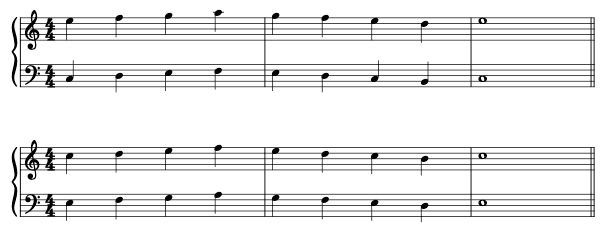
Parallel motion can also occur when an apparent 4–3 suspension or appoggiatura resolves not over the same bass note but over a bass note one step lower, resulting in parallel fourths. In the second half of the first bar of the example below, both fourths are perfect; in the first half of the third bar, the first is perfect and the second augmented.

Fauxbourdon is a three-part example of parallel motion.
In ‘tonal’ music, parallel perfect fifths and octaves are generally prohibited, whereas in other styles they do occur.
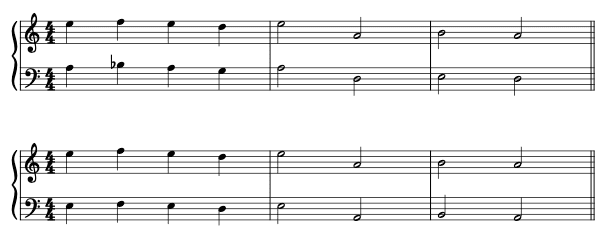
When, however, the two voices move in the same direction but the generic vertical interval between them changes, we speak of similar motion.
The other types of contrapuntal motion are: